The WNBA is in a really exciting place right now.
There’s real momentum building across the league, driven by a combination of factors that all seem to be hitting at once. A new CBA on the horizon, growing attention on women’s sports, and a draft class that feels genuinely deep all point to a league that is not only evolving but expanding in a way that feels sustainable. This year didn’t come with a single, obvious No. 1 pick in the way recent drafts have. Instead, it brought something more interesting a group of players who are expected to step in and make an impact right away.
What continues to stand out, though, goes beyond the basketball.
More and more, players are entering the league already out. Not cautiously, not years into their careers, but from the start, with a level of confidence that being LGBTQ is not going to limit their opportunities, whether that’s on the court or in the broader landscape of sponsorships and visibility. For a league that has always been deeply LGBTQ, this moment feels like a natural progression, but also a meaningful one. The visibility feels more open, more comfortable, and more fully integrated into how players show up as themselves.
That shift was present throughout the entire draft.
The Story Everyone Was Watching For Reasons Beyond Basketball
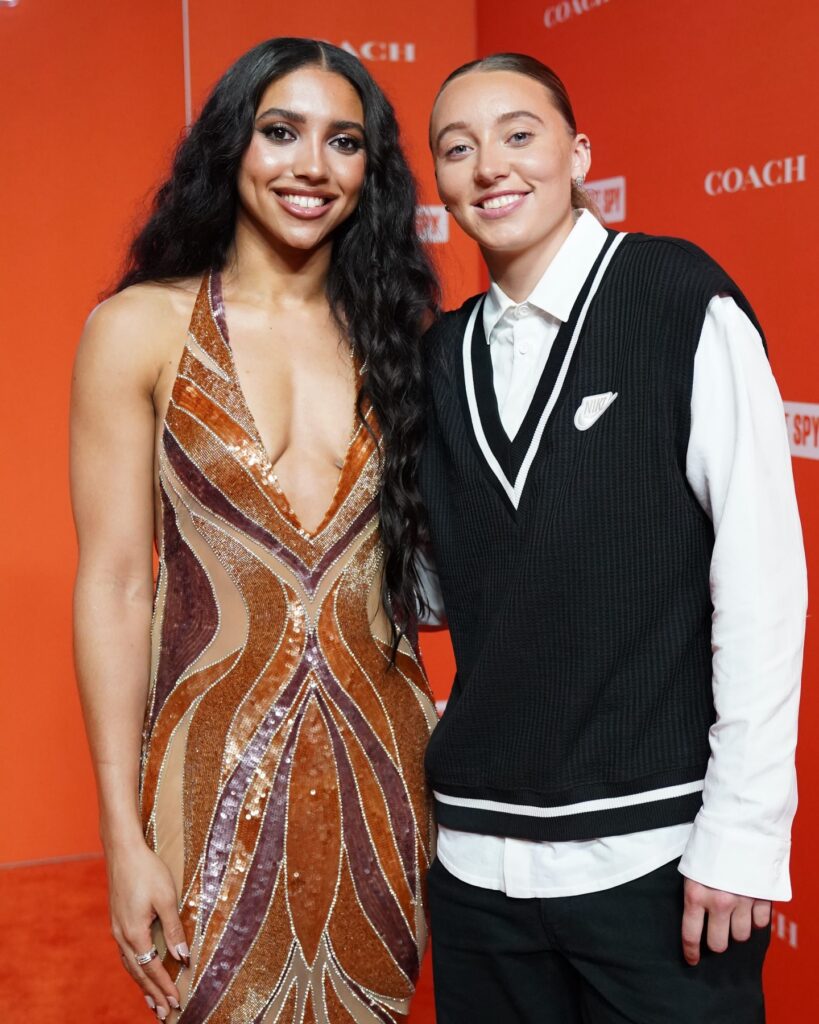
The headline of the night was always going to be Azzi Fudd going No. 1 overall to the Dallas Wings. That part felt clear well before draft night, but what made the moment feel bigger, and why so many LGBTQ fans were paying close attention, had just as much to do with Paige Bueckers as it did with the pick itself.
The two have a history that people are deeply invested in, built through their time at UConn and most recently defined by a national championship run that ended with Fudd earning Most Outstanding Player honors. Their relationship, which was confirmed publicly last year, has since become more private, with fewer shared moments and a noticeable shift away from the spotlight at the same time the attention around them has continued to grow.
That is where the tension sits.
The WNBA is a league where LGBTQ players are visible, where relationships often exist openly alongside the game, and where fans are used to seeing that part of players’ lives without it feeling hidden. When two of the league’s most recognizable young stars move in a more private direction, it naturally draws attention. Not in a way that feels negative, but in a way that reflects how invested people have become.
There is a push and pull here between visibility and boundaries that feels very specific to this moment. Fans are curious, and with that curiosity comes a tendency to read into what is and isn’t being shared. At the same time, the more that attention builds, the more understandable it becomes that players would choose to step back, creating a dynamic where curiosity and privacy are constantly in conversation with each other.
All of that existed in the background of this moment.
Because now, regardless of what is public or private, they are back on the same team. Two No. 1 picks, a shared history of success, and a real opportunity to shape the future of a franchise that has been looking for a reset. That alone is compelling, even before you layer in everything else.
So yes, people were watching for the story. That is part of it. But what ultimately gives this moment staying power is what happens next.
A Moment at the Top of the Draft Still Matters
Zooming out, there was another moment at the very top of the draft that felt quietly significant.
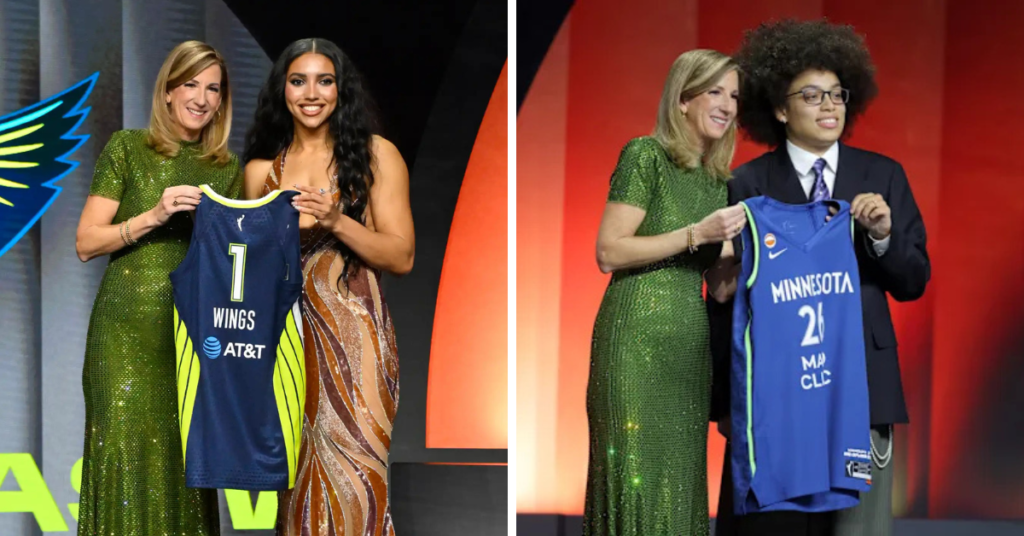
Azzi Fudd and Olivia Miles going No. 1 and No. 2 as out LGBTQ players is not something we have consistently seen in this way. And while the WNBA has never hidden its identity as a deeply LGBTQ league, seeing that representation reflected so clearly at the very top still carries weight.
It does not feel like a shift so much as a continuation. A reminder that the next generation is stepping in already comfortable being fully themselves, while still being recognized for their talent at the highest level.
That kind of visibility matters, even when it starts to feel normal.
Azzi Fudd Enters a Legacy of LGBTQ No. 1 Picks
Fudd’s selection also places her within a much larger legacy. With this pick, she becomes the 13th LGBTQ player to be drafted No. 1 overall in WNBA history.
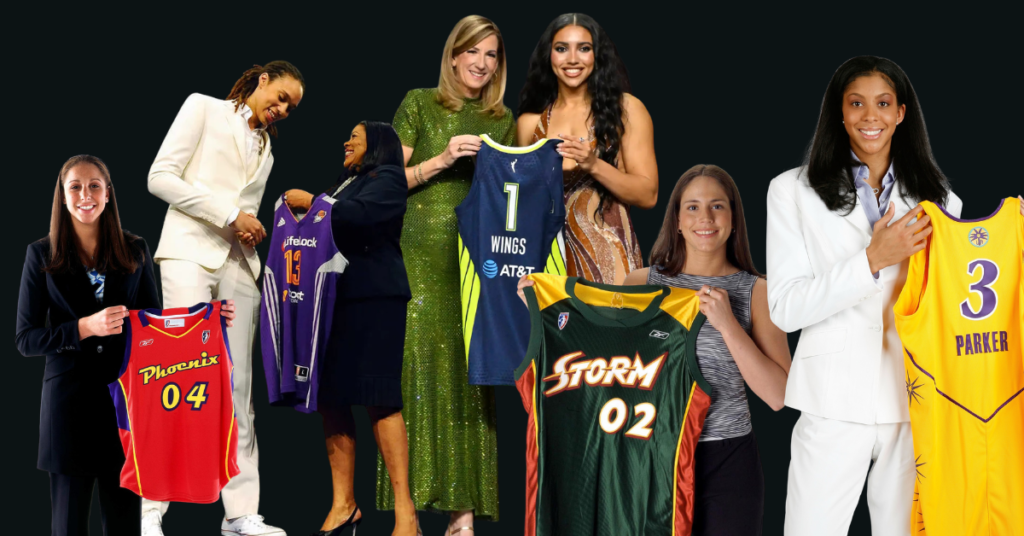
That legacy includes players like Sue Bird, Brittney Griner, Diana Taurasi, Candace Parker, and more recently, Paige Bueckers, a throughline of talent that makes it clear that LGBTQ players have not just been present in the league but have consistently been among its most dominant.
Fudd does not stand apart from that history. She fits directly into it, reinforcing a pattern that has existed for decades and continues to define the league at its highest level.
Draft Night Style Continues to Tell Its Own Story
Draft night style has always been part of the WNBA’s visual language, but it continues to carry a deeper significance because of how closely it is tied to identity.
Olivia Miles stood out immediately because the looks felt so clearly her. The tailoring was sharp, the styling was intentional, and small personal details, including her family’s names stitched inside her jacket, grounded the look in something that felt both personal and meaningful.
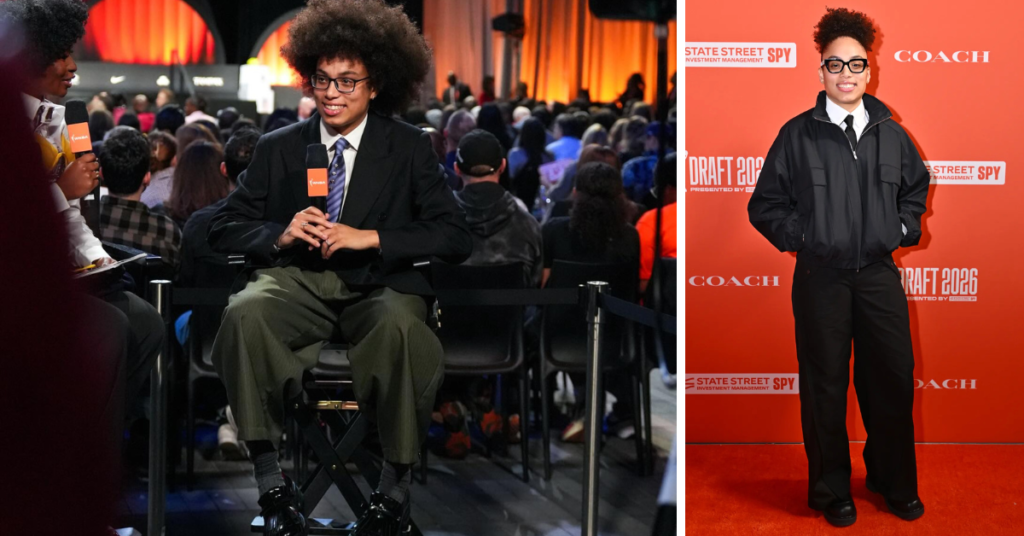
There was a time when players felt pressure to present differently on nights like this, to align with a more traditional or marketable image of the league. Looking back at past drafts, that contrast is easy to see.
What makes this moment stand out is how little that pressure seems to exist now.
Miles is not pushing against expectations. She is simply showing up as herself, fully and confidently, and being celebrated for both her style and her talent as the No. 2 pick. For some more WNBA masc style inspo check out the fits from All Star weekend.
The Next Generation Is Stepping In Fully
That same sense of ease extends beyond draft night and across the entire class, offering a clear look at where the league is headed.
Players like Taina Mair and Rori Harmon are entering the WNBA already out, already comfortable, and already established in who they are. There is no sense of waiting or gradual transition. Instead, their identities exist as a natural and integrated part of their presence in the league from the very beginning.
That shift is significant when viewed in the context of the league’s history. In earlier eras, many players chose to keep that part of their identity private, navigating a landscape that felt far less certain in terms of visibility and acceptance. What we are seeing now is a different kind of entry point, one where players can step into the league without separating who they are from how they compete.
The WNBA is not becoming an LGBTQ league. It already is one. What is evolving is how fully that identity is expressed across generations. Younger players are stepping into a space that allows for that visibility, and the league itself continues to reflect and support that shift.
This draft class does not redefine the WNBA’s identity. It deepens it, reinforcing a foundation that has long been there while showing what it looks like when that foundation is met with a new level of confidence and openness.
And that is what makes this moment feel worth paying attention to.