For the modern digital nomad, the dream has long been about the “four-hour workweek” on a beach in Bali or a cafe in Lisbon. But for queer couples, that dream often comes with a significant logistical asterisk. While a single traveler might only need to worry about a strong Wi-Fi signal and a favorable tax bracket, a queer couple has to navigate a minefield of “Life Admin.”
In the nomad world, Life Admin is the invisible infrastructure that makes life possible. It’s the ability to get your partner on your health insurance. It’s the peace of mind knowing that if one of you is hospitalized, the other has legal standing as next-of-kin. It’s the absence of “the look” from a government official when you hand over a marriage certificate from a different jurisdiction.
As we move into 2026, several countries have realized that attracting top-tier remote talent means offering more than just sunshine. It means offering Legal Dignity. Here is why Malta, Spain, and Portugal have become the “Big Three” for queer couples looking to relocate.
Malta: The Gold Standard for Legal Certainty
For several years running, Malta has held the #1 spot on the ILGA-Europe Rainbow Map, it remains the most legally secure environment for LGBTQ+ people in the world. For a digital nomad, this translates into a Nomad Residence Permit that is as inclusive as it is efficient. Malta doesn’t just recognize same-sex marriage; it recognizes “stable relationships.”

Even if you aren’t legally married, you can include your partner in your application by providing evidence of your shared life. The permit requires a gross annual income of €42,000. For a couple, the application fee is a straightforward €300 for the main applicant and an additional €300 for the partner.
Once you are a resident, you have access to a country where gender identity is protected in the constitution and conversion therapy is a criminal offense. You aren’t just a guest; you are protected.
Spain: The “Beckham Law” and Cultural Integration
Spain has long been a cultural favorite for the community, but its Digital Nomad Visa (DNV), launched under the “Startups Law,” has made it a logistical powerhouse.

Spain has a robust legal framework for “unmarried partners.” If you have been living together for a significant period, Spanish law treats you as a family unit. This makes the “Family Reunification” part of the visa process significantly easier than in more conservative EU states.
In 2026, the primary applicant must earn roughly €2,750 per month (200% of the national minimum wage). To add a partner, you simply show an additional 75% of that amount.
Through the “Beckham Law” election, nomads can often pay a flat 24% tax rate on Spanish-sourced income, but the real luxury is Social Integration. From the “Gaixample” in Barcelona to the Chueca district in Madrid, Spain offers a level of visible, daily queer joy that is hard to quantify on a visa application.
Portugal: The D8 Visa and the Path to Citizenship
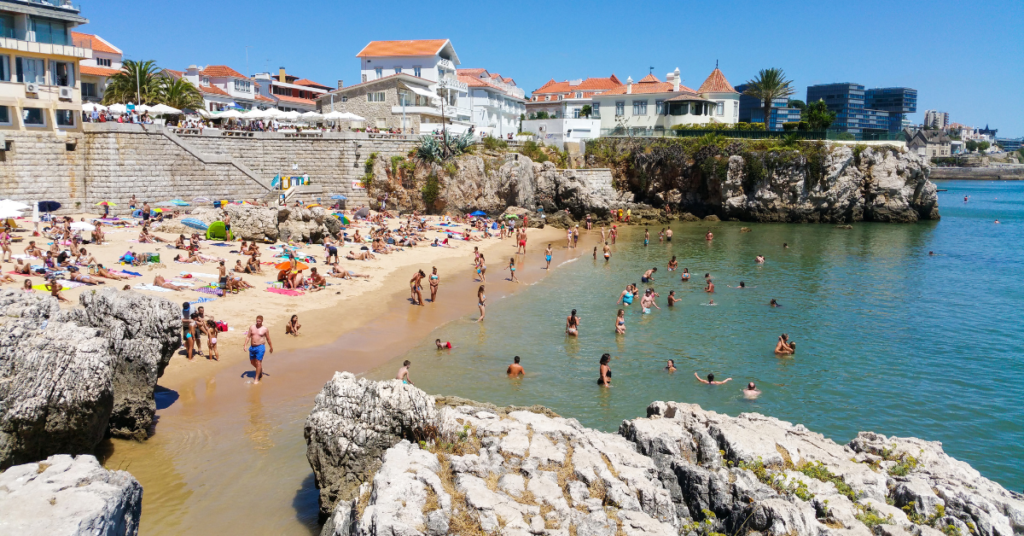
Portugal remains a top contender because it offers something many other nomad visas don’t – A clear path to a permanent home.
While the D7 was originally for passive income (retirees), the D8 is specifically for active remote workers. It requires a monthly income of around €3,680 (four times the 2026 minimum wage).
Portugal’s immigration agency (AIMA) is familiar with same-sex couples. By documenting your “Uniāo Estável” (Stable Union), your partner gains the right to live and work in Portugal alongside you.
After five years of residency on a D8 visa, you and your partner can apply for Portuguese citizenship. For couples fleeing hostile legal environments in their home countries, this isn’t just a visa; it’s an escape hatch.
Questions to Ask Before You Move Abroad
Before you pack your bags, I recommend that every queer couple run their own “Life Admin” audit on their destination:
Healthcare: Will the private insurance required for the visa cover gender-affirming care or HIV preventative care (PrEP) without a struggle?
Parental Rights: If you are planning to start a family, does the host country recognize “second-parent adoption” for same-sex couples? (In Malta and Spain, the answer is a resounding yes).
Housing: Does the country have strong anti-discrimination laws in the private rental market? You don’t want to find the perfect apartment only to be turned away at the door.