After 48 countries and all seven continents, these are the tools and habits I rely on again and again.
If you want to be scared of the world, watch the news. If you want to fall in love with the world, travel.
After two decades of exploring the world, that is one of the things I believe most deeply. I have built a career talking about LGBTQ+ travel safety, and I know the risks are real. According to Human Dignity Trust, there are still 66 jurisdictions that criminalize private, consensual same-sex activity, and dozens more criminalize or target transgender people through laws governing gender identity and expression. That’s not something I can ignore as a visibly queer, gender-nonconforming person.
It is also not the whole story.
The number of times I have been welcomed, treated with kindness and invited into someone’s world far outnumbers the times I have experienced a problem. It is not even close. I’ve been invited in for tea in Morocco, been guided through markets in Tanzania by strangers and was shown so much kindness when sick in Egypt. I have met guides who were genuinely excited to show me the places they love. So many times, I have entered a situation feeling nervous because the news or society taught me that I should be, only to leave feeling lighter. My world became a little bigger, and the thing that once sat outside my comfort zone became something I knew I could do.
My goal is not to eliminate every uncomfortable moment. Discomfort is part of travel, and expanding my comfort zone is one of the things I love most about it. My goal is to understand the risks, minimize the friction I can and create enough ease that I can experience the culture, eat the food and see the sights without my gender expression dictating the entire trip.
These are the tools, decisions and habits that help me do that.
I decide what I want from a particular trip
I do not believe in dividing the world into places queer people should and should not visit. People are not their governments. Queer people exist everywhere, including in countries with governments that criminalize or openly oppose them. Blanket travel bans flatten complicated places and make an incredibly personal decision for someone else.
That does not mean I ignore the law or pretend every destination presents the same level of risk. I make calculations as a visibly queer traveler, and those calculations change depending on what I want from a trip.
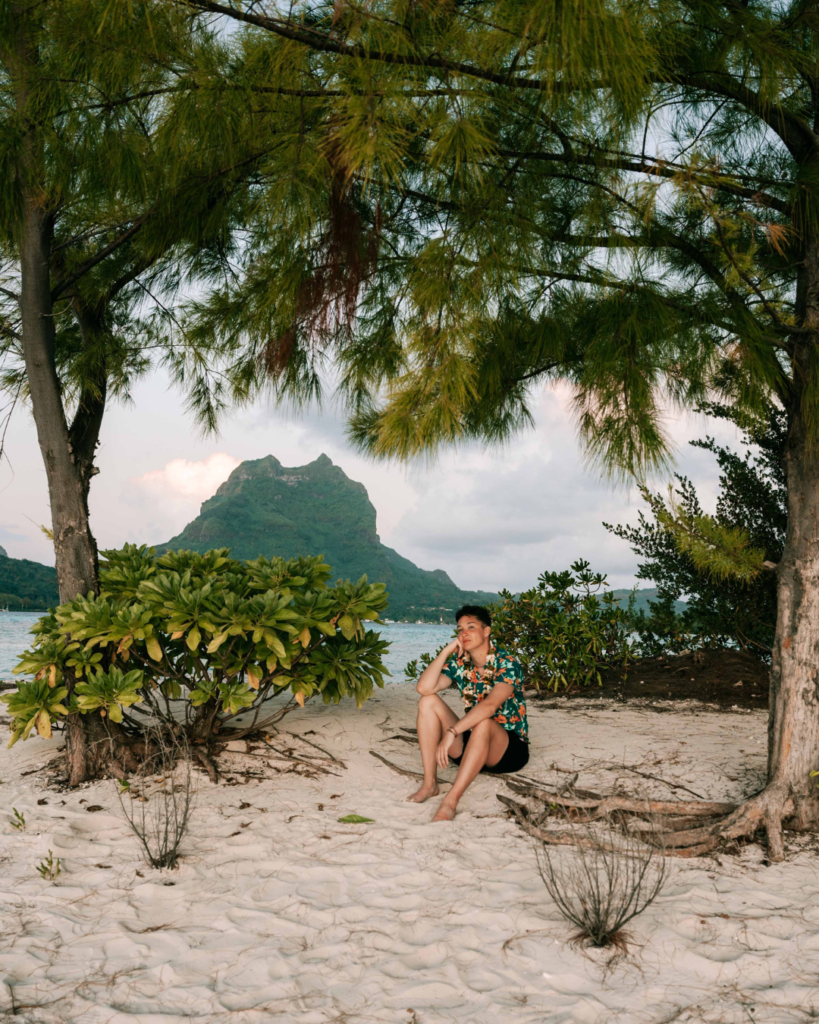
If I want a laid-back beach vacation where I can completely exhale, I might choose French Polynesia over the Maldives. That does not mean I will never visit the Maldives. It means I understand what I am getting into and choose the destination that better matches the experience I want right now.
I have a list of places I would not visit at this point in my life. It is a personal list, not one I use to tell anyone else where they should go, and it is always evolving as I learn more and meet new people. I have never traveled to a country where same-sex activity is punishable by death. Someone else may draw the line somewhere different. That is okay. Risk tolerance is deeply personal, and there is no prize for choosing the trip that makes you the most uncomfortable.
I research the law, then look beyond it
Equaldex is a great resource when researching a new destination. For me, I want to know whether being LGBTQ+ is legal, when it became legal and what public opinion looks like. The Equality Index separates a destination’s legal rights from public attitudes. Those two things can tell very different stories.
Marriage equality and workplace protections are enormously important to the people who live in a destination, but they do not always tell me how I will be received during a one-week visit. As a traveler, the public-opinion side often has a more noticeable effect on my day-to-day experience.
I learned that firsthand in Oklahoma City. The city is sometimes described as a blue dot in a red state, but I experienced more homophobic and transphobic behavior there than anywhere else I have traveled.
Meanwhile, I had beautiful, welcoming experiences in Jordan and Morocco, countries whose laws and reputations gave me far more reason to feel apprehensive. That does not make the laws irrelevant or mean another LGBTQ+ traveler will have the same experience. It means policy alone cannot predict every human interaction.
I use the information to prepare, not to write off an entire population before I arrive.
I use booking tools that create a little more ease
Skyscanner is my favorite way to search for flights. I find it easier than most other flight tools, it gives me plenty of options and I often complete my booking through the platform. I also appreciate the company’s support of LGBTQ+ travel. EveryQueer founder Meg Ten Eyck has worked directly with Skyscanner, including providing professional development training about queer travel.
Would I always pay hundreds more to fly with the most visibly LGBTQ-friendly airline? Honestly, no. I am often booking the least expensive reasonable flight. When the price and route are comparable, however, I feel good choosing airlines like Delta and KLM that have demonstrated support for the community.
Skyscanner also makes it easy to compare layover options on long flights. Where you connect is an often-overlooked consideration for queer travelers. Even if your final destination is LGBTQ+ friendly, your layover could be somewhere less welcoming. Knowing that in advance allows you to plan for the airport experience or choose a route with a connection that feels more comfortable.
For hotels, I look for Booking.com’s Travel Proud designation. Properties earn it after completing LGBTQ+ inclusive hospitality training, and Booking.com now offers a Travel Proud filter to make participating accommodations easier to find.
I have stayed at several Travel Proud properties. A label cannot guarantee that every employee or interaction will be perfect, but it gives me peace of mind knowing that someone at the property has intentionally engaged with the needs of LGBTQ+ guests. It is not the end of my research. It is a meaningful place to start.
I remove as much airport and border friction as possible
Almost every time I go through a body scanner, I am asked to step back and be scanned again, sometimes two or three times. The experience can flag my body, draw attention to my gender presentation and turn an ordinary security process into something frustrating, embarrassing or scary.
TSA PreCheck has significantly reduced how often that happens because I can more frequently use expedited screening and a metal detector rather than the standard body scanner. It is not a guarantee that I will never receive additional screening, but it has made flying easier for me.
Global Entry serves a different purpose, expediting clearance for preapproved travelers when returning to the United States. Together, the two programs reduce the amount of time I spend in airport security and immigration processes where I may already feel especially visible.
When traveling internationally, I am extremely diligent about visas and documentation. Before I reach the airport or border, I know what I need, where it is and when I will be asked for it. My goal is to move through efficiently, answer what I need to answer and avoid creating an unnecessary reason to hold me up. This is not about acting as though I have done something wrong. It is about removing avoidable complications so I can get on with the trip.
I keep copies of important documents within reach
I keep photos of my passport, visas and other important documents on my phone. Is leaving them in my regular camera roll the most sophisticated security system? No. That is simply what I actually do, and having the copies immediately accessible has been useful.
There is a trade-off. A passport photo contains sensitive personal information, so travelers should protect their phones with a strong passcode and biometric security and consider using password-protected or encrypted storage instead of an ordinary photo album. The important part is having a backup you can access if a document is lost, stolen or temporarily unavailable.
I also share my location with my partner and family. When I am traveling in a group, I sometimes share it with another person so we can find each other if we get separated. This is not something I do because I expect the worst. It is a small layer of preparation that makes everyone’s life easier.
Sometimes I pay for more control over the experience
Private transportation and tours are not always necessary or financially realistic. They are also not exclusively an LGBTQ+ safety strategy. Sometimes they are simply easier, faster or better suited to the experience I want.
There are moments, however, when paying for a private car or guide gives me more control over my environment. If I am choosing between a crowded local bus and a private driver in a place where I already feel nervous, I may feel more comfortable with one person I have hired at a fair rate than surrounded by the general public.
In Vietnam, we found a driver we liked and used him for several short tours. By the time we booked a six-hour drive with him, we already had a base level of comfort. He had been kind, professional and reliable. Spending that long in a car with someone familiar felt like far less of an unknown than starting over with a stranger.
When I find a driver or guide I trust, I save their WhatsApp information and hire them again when possible.
I say my fears out loud
The people traveling with me cannot read my mind, and they may not perceive a situation the way I do. If I am worried about entering a bathroom, moving through a security checkpoint or negotiating with a taxi driver, I try to say it out loud.
That gives the people around me an opportunity to understand what is happening and help in a way that is actually useful. Sometimes that means asking, “Can you walk to the bathroom with me?” It may mean asking someone else to handle the hotel check-in, negotiate a price or stay nearby during an interaction.
I have found that when traveling in a group people generally want to support me. Sometimes they just need direction about what support looks like. Even with people close to me, saying I am uncomfortable or nervous about something helps them to understand a situation much better.
It is equally important to tell them what I do not want. When someone casually misgenders me, I often let it go. If a stranger perceives me as a man during a brief interaction, I do not necessarily need anyone to stop everything and correct them because it can unintentionally put me at risk. I always prioritize my safety first. That could be an unpopular opinion, and many trans, nonbinary and gender-nonconforming travelers feel differently. Their needs are just as valid. The point is to communicate rather than assume every LGBTQ+ traveler wants the same kind of advocacy.
I make a mental note of every bathroom that works for me
In 2014, shortly after cutting my hair short, I was traveling in South Korea and walked into a women’s bathroom. An older woman began yelling at me in Korean. I did not understand what she was saying, so she used a mop to push me back out of the bathroom.
That experience became a turning point. As I started being misgendered more consistently, bathrooms became something I had to think about differently.
Now, I notice every gender-neutral and single-stall bathroom I encounter. Sometimes it is an officially designated all-gender restroom. Sometimes it is just the tiny toilet at the back of a local café. A small business with one private bathroom can put me in a much more comfortable position than an expensive restaurant or hotel lobby with two highly visible gendered options.
I do not usually research bathrooms before exploring a city. My strategy is observational. When I see an option that works, I remember it. I mention it to other people in my group, and I appreciate when they do the same for me. Those years of observation eventually became EveryQueer’s guide to gender-neutral bathrooms in U.S. airports.
Getting creative about where and when I use the bathroom has been a game changer. It lets me meet a basic need without allowing that need to dictate the entire day for me.
I listen to discomfort without always letting it make the decision
Travel has made me observant. I pay attention to who is around me, how people are responding and how I feel in a space. Over time, I have intentionally learned to do that without constantly searching for something bad or dangerous.
If I go looking for a reason to feel nervous, I will almost certainly find one. Awareness is different from holding my breath and waiting for something to go wrong.
I check in with myself often. Sometimes I recognize that I am uncomfortable because something is unfamiliar, and I choose to stay, walk through it and give the experience a chance. Other times, my gut tells me to leave, skip the activity or walk back to the hotel. I trust that feeling too.
Knowing the difference is a learned skill, and it may be one of the greatest gifts travel has given me. When I look back at the things that once sat outside my comfort zone and now feel easy, I am genuinely proud of myself. Travel has shown me how much that zone can expand without requiring me to ignore my instincts.
I also know that making myself look more feminine does not make me feel safer. Early in my travels, I sometimes chose outfits that I thought would make my gender easier for other people to understand. Instead, I felt uncomfortable and hated every photo of myself from those trips. Making myself smaller or less recognizable to myself was not the answer.
I am a gender-nonconforming person. My pronouns are she and her, mostly for ease and simplicity. Internally, I think of myself as a little genderless alien. However I explain it, I deserve to take up space and see the world as myself.
I travel with people who understand the nuances
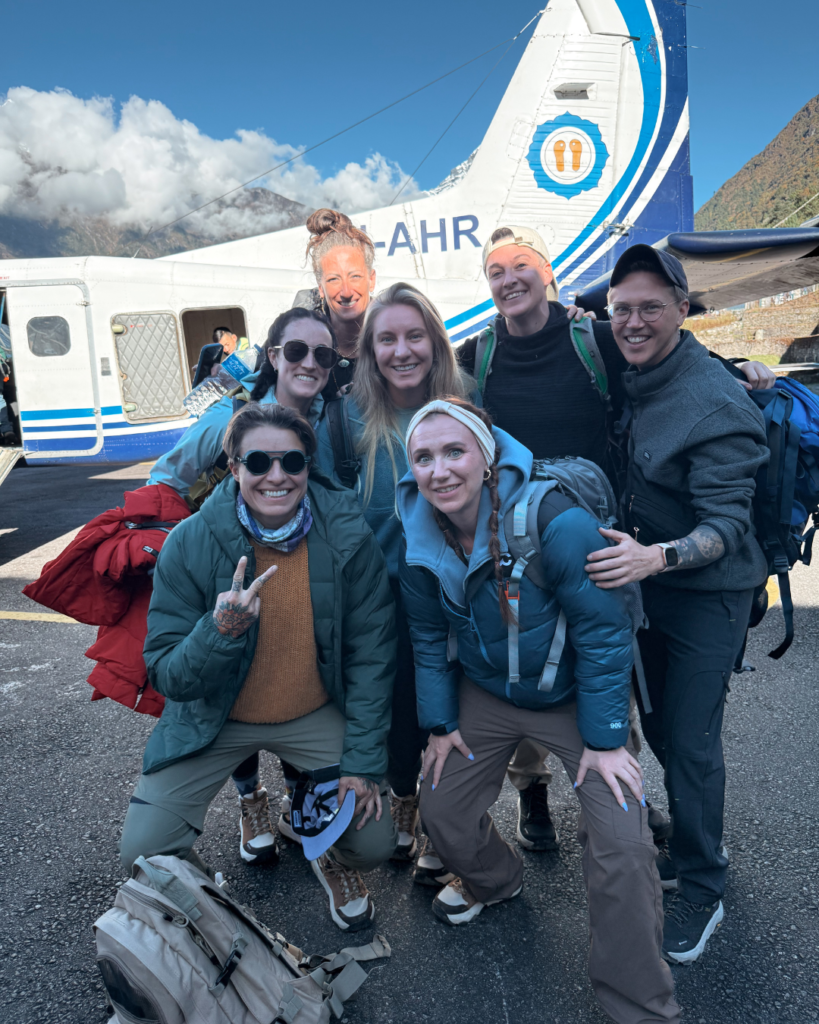
I have traveled on EveryQueer tours, joined other LGBTQ+ tour groups, including luxury Source Journeys, and explored in groups made up of both queer and straight travelers. There can certainly be safety in numbers, but that is not the main reason queer group travel matters to me.
My favorite part is being understood.
There is relief in traveling with people who already recognize the nuances of existing as a queer person in a new place. I don’t need to explain every glance, calculate everything alone or translate why a seemingly small interaction affected me. There is community, shared context and the freedom to experience the destination with people who get it.
That does not mean every queer group or space will automatically feel safe. Many places have taught me that a rainbow on the door cannot guarantee how I will be treated inside. But traveling with people I trust gives me support when something does happen and, far more often, people with whom I can share the beautiful parts.
You can see the world
I do not subscribe to the idea that queer travelers should smile politely through homophobia or transphobia. It is okay to stand up for yourself. It is okay to take up space. It is also okay to decide that engaging is not worth your energy and walk away.
There is no single correct level of risk, no universal list of places every LGBTQ+ person should avoid and no travel strategy that guarantees a perfect experience. Some trans travelers may face legal, medical and social concerns that I do not, and I will not pretend to speak for them. I do believe many trans, nonbinary and gender-nonconforming travelers will recognize some of these calculations, even if we make different choices.
The point is not to travel without fear. It is to gather information, prepare thoughtfully, communicate what you need and leave enough room for the world to surprise you.
You can see the world. That does not mean forcing yourself into every situation or following someone else’s idea of bravery. It means making the decisions that are right for you, trusting yourself and allowing the world to become bigger instead of scarier.