In Bury Our Bones in the Midnight Soil, V.E. Schwab crafts a haunting modern gothic that strips away the glamour of immortality to reveal the rot beneath.
If you are looking for a story where queerness is at the absolute center, featuring toxic lesbian vampires, female rage, and women putting men in their graves, this book delivers on those atmospheric promises.
Spanning dual timelines with mirrored lives, the story follows women who turn to vampirism as a desperate key to freedom in a world determined to keep them lobotomized or buried.
This isn’t a story of soft romance; it is a “lesbian pulp” exploration of female rage, toxic power struggles, and the “vampire dementia” that sets in when an eternal life becomes defined by an unquenchable hunger.
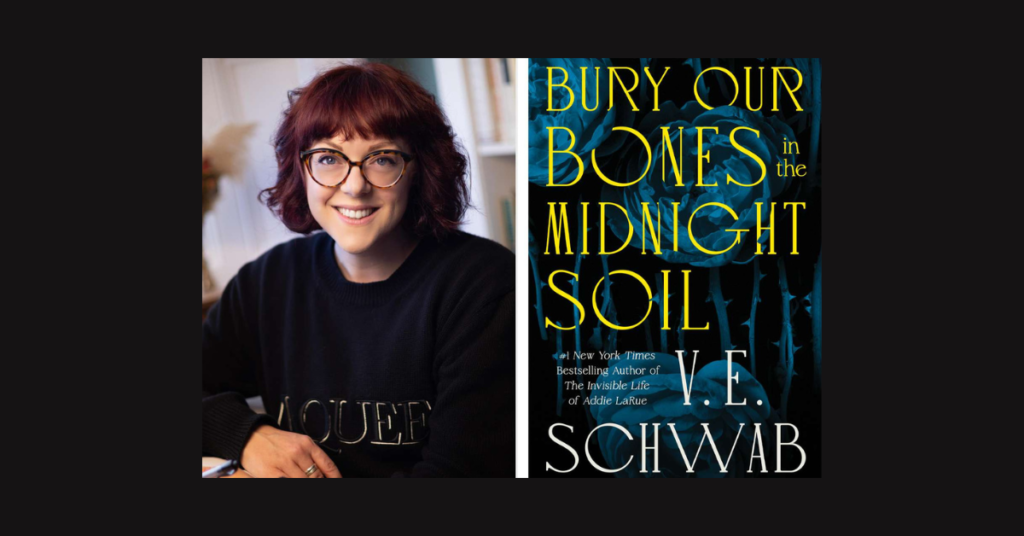
As queerness and revenge take center stage, the novel examines the heavy cost of claiming one’s own power and what happens to the soul when it loses everything soft in exchange for survival.
What Worked: The Atmosphere and Themes
The setup for this novel is undeniably ambitious. Schwab explores the idea that eternal life isn’t “sexy”—it’s lonely, depleting, and eventually leads to a monstrous sort of rotting or insanity.
The novel excels at portraying the cost of power, offering a raw look at women defying a world that seeks to erase or bury them. In this world of systemic misogyny, vampirism is presented as a literal key to liberation, granting a brutal form of freedom that nonetheless comes with death and a never-ending hunger.
This freedom also fuels the toxic dynamics at the heart of the story, which elevate the “crazy ex-girlfriend” trope to new heights, making the foundational lesbian drama messy, dark, and visceral.
Why it fell short
Despite the incredible world-building and the fascinating exploration of what happens when a vampire starts to lose their mind, I found myself struggling to fully engage with the core of the book.
Despite the powerful themes of female rage and revenge, I struggled to emotionally connect with Lottie and Alice’s storyline. At times, the energy of the plot felt at odds with the dense, gothic prose. While the “sort-of” love triangle and the power struggles were interesting on paper, they didn’t always translate into a propulsive reading experience.
Final Verdict: A beautifully written, queer-centric gothic for fans of “female monster” tropes and complex, toxic relationships. However, the emotional distance in the dual timelines kept this from being a five-star read for me.