Let’s be honest about what we’re dealing with here. Mother Mary, A24’s new psychological pop thriller directed by David Lowery, is not a film that buries its queerness in subtext. It is not a film where two women exchange a lingering glance and the audience is left to wonder. It is not another prestige drama where the sapphic storyline exists as a subplot to a straight woman’s more important narrative. Mother Mary puts queer desire front and center, frames it as the beating heart of the entire film, and then hands that film to two of the most compelling actresses working today. It opens April 17. You need to be in a seat.
What It’s About
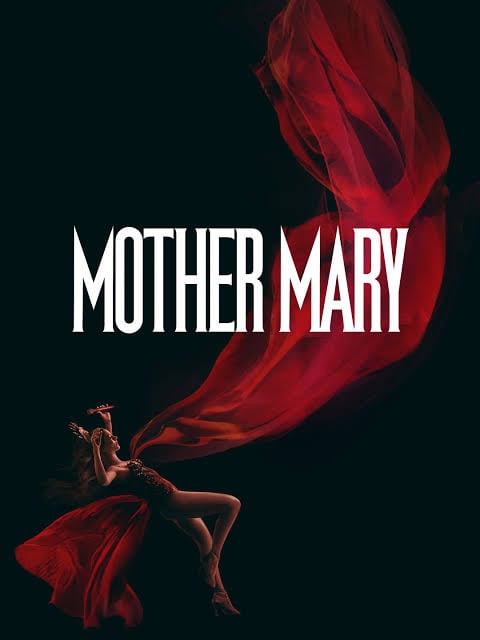
The setup is deceptively simple. Iconic pop star Mother Mary (Anne Hathaway) — think Lady Gaga’s mythological maximalism crossed with Taylor Swift’s cultural ubiquity — is on the eve of a comeback performance. She reaches out to Sam Anselm (Michaela Coel), her estranged lover and former costume designer, the woman who helped build her entire public persona, and requests one final dress.
What follows is a dreamlike, hallucinatory night at Sam’s country estate, a collision of old wounds, buried history, and the kind of charged, unresolved intimacy that doesn’t have a clean name.
The film has been described across outlets as a “psychosexual affair” between two women, a dark pop melodrama that blends queer desire with elements of the occult. There is a seance. There is an apparition called the Red Woman. There is, apparently, some gore. And underneath all of it, there is the story of two women who loved each other in ways that neither of them has ever fully reckoned with.This is not subtext. The trailer shows sapphic tension that requires no interpretation. Mother Mary is, unambiguously, a queer film and it is being made and released at the level of prestige that queer women’s stories almost never receive.
Why the Cast Matters
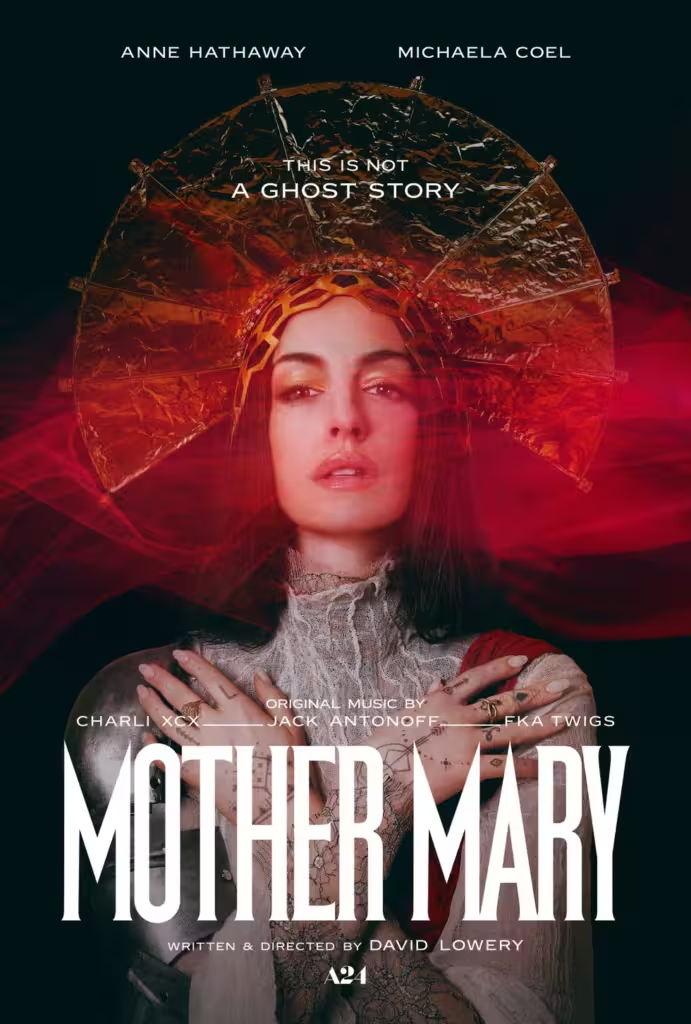
Anne Hathaway is giving everything to this role. She trained as a pop star. She sings every song on the soundtrack herself. She reportedly had an emotional breakdown mid-shoot, turning to director David Lowery and saying, “I have to apologize, because I think what’s going to come out of me will hurt you.” Michaela Coel took her hands and said, “I love you, I trust you.” That exchange, which happened between actress and actress, not character and character, tells you something important about the energy this film was made with.
Coel, for her part, brings a weight to Sam that no one else could. She is the creator and star of I May Destroy You, one of the most searingly honest explorations of bodily autonomy, desire, and trauma ever put on screen. She understands intimacy as a site of both joy and devastation. The idea of her playing the woman who built a pop star’s image — who poured herself into someone else’s mythology and was then cast aside is almost unbearably resonant before the film even begins.
The supporting cast is its own kind of statement. Hunter Schafer, the openly trans actress from Euphoria, is in this film. So is FKA Twigs, who also wrote one of the most talked-about songs on the soundtrack. Kaia Gerber, Alba Baptista, Sian Clifford, and Jessica Brown Findlay round out an ensemble that is notably, deliberately, overwhelmingly female. This is a film built in a world where women — and specifically queer women — are the entire universe.
The Soundtrack Is a Queer Cultural Event
You cannot talk about Mother Mary without talking about the music, because the music is inseparable from why this film matters to our community right now.
The original songs were written and produced by Jack Antonoff and Charli XCX — yes, that Charli XCX, the reigning queer pop icon whose Brat era made her one of the most visible and beloved figures in sapphic pop culture. Her fingerprints on this soundtrack are not incidental. They are a signal. The lead single, “Burial,” was co-written by Charli XCX, Jack Antonoff, and George Daniel, and performed by Hathaway in a way that has left early listeners genuinely shaken.FKA Twigs contributed “My Mouth Is Lonely for You” — a title that, in the context of this film’s sapphic history between its two leads, lands with extraordinary weight. The full soundtrack, Mother Mary: Greatest Hits, drops April 17 via A24 Music and features seven original songs all performed by Hathaway. It is one of the most anticipated album releases of the year, in any genre, for any audience.
Why This Film Is a Moment for Queer Women
A24 has long been the studio most willing to take genuine risks on queer storytelling. Moonlight won Best Picture. Everything Everywhere All at Once redefined what a queer film could look like at scale. But Mother Mary feels like something different, a film that is not about queerness as struggle or queerness as revelation, but queerness as the complicated, electric, historically-loaded dynamic between two specific women who have never stopped being each other’s most important person.
That is a story queer women know intimately. The best friend who was always something more. The relationship that didn’t have a name at the time but has one now, in retrospect, looking back at it from the other side of whatever you’ve become. The person who helped shape who you are and who you’ve been trying to outrun ever since. Mother Mary takes that experience and puts it inside a pop star mythology, a supernatural thriller, and a Charli XCX-scored psychological spiral and asks us to sit with it.
David Lowery has said plainly: “It is a movie that will provoke, I am sure, a lot of strong feelings, in every possible direction.” For queer women, we’d argue those feelings are going to hit differently than they do for anyone else in that theater. This is our story, dressed in sequins and fog machines and the best soundtrack of 2026.Mother Mary opens in limited theaters April 17 and wide on April 24. We’ll see you there.