Catherine Opie is the patron saint of the queer gaze. For over three decades, Opie hasn’t just been taking pictures, she’s been building a home. She is the architect of our visual archive, a photographer who looked at the leather dykes, the drag kings, and the butch-femme couples of the nineties and decided they weren’t just queer subcultures. She decided they were our royalty. As her massive new exhibition, Catherine Opie: To Be Seen, takes over the National Portrait Gallery in London this year, it’s the perfect moment to look back at how this Southern California native turned the “marginalized” into the “magnificent.”
The Architect of the Queer Archive
In the early nineties, the art world wasn’t exactly rolling out the red carpet for leather-clad lesbians or gender-nonconforming folks. We were often viewed through the lens of “the other” pathologized by medicine or fetishized by the media. Enter Catherine Opie. Opie’s brilliance lies in her use of formal, classical portraiture. She didn’t snap grainy, candid photos in dark bars. Instead, she sat her friends in front of vibrant, royal-hued backdrops with bright yellows, deep teals, and regal reds. By using the same lighting and composition techniques used to paint European monarchs, she made a radical statement. These people are important. This history is permanent. She gave our community a “royal family” at a time when society was trying to erase us.
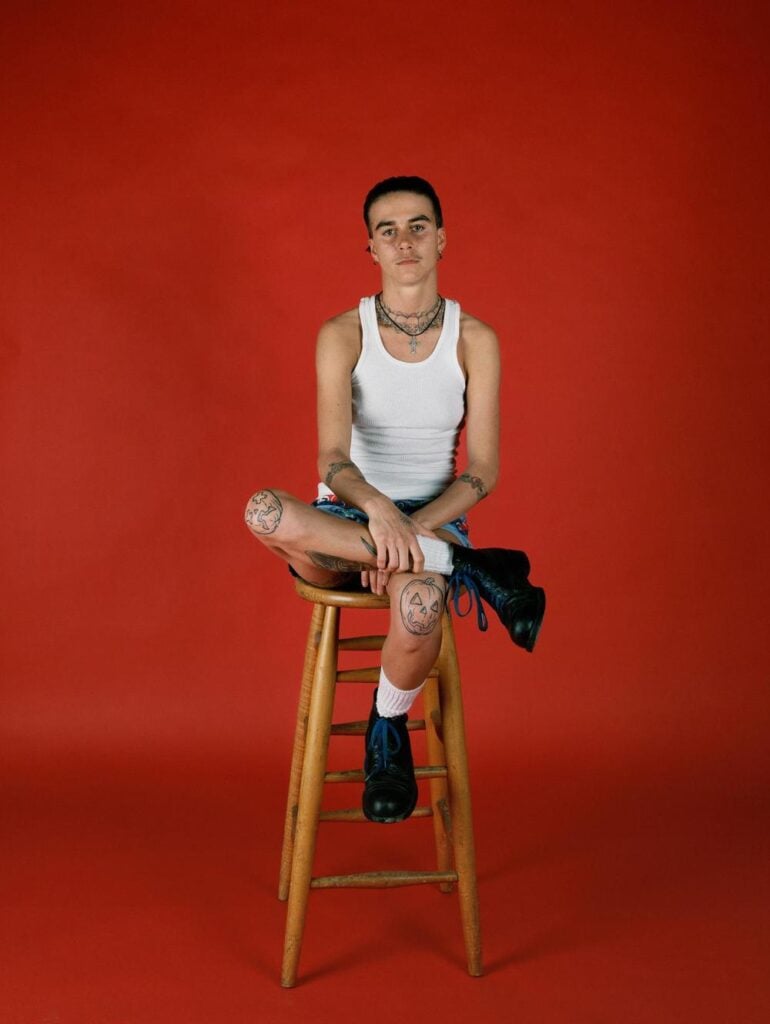
The 1990s Queer Subcultures
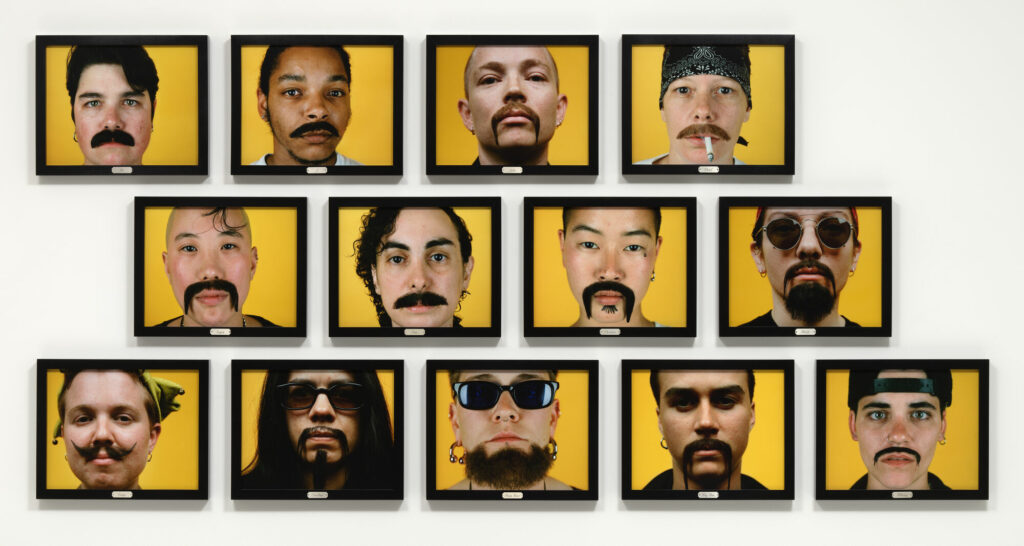
You can’t talk about Opie without talking about her seminal 1991 series, Being and Having. If you’ve ever played with a fake moustache and a bit of spirit gum, you’re walking in the footsteps of this work. The series features close-up portraits of her friends in the San Francisco and LA leather communities, sporting facial hair and piercing stares.
These images were a playful yet profound middle finger to the rigid gender binary. By framing these women and non-binary folks in such a tight, traditional way, Opie forced the viewer to confront their own assumptions. Are you looking at a man? A woman? Does the distinction even matter if the person in the frame is this self-assured?
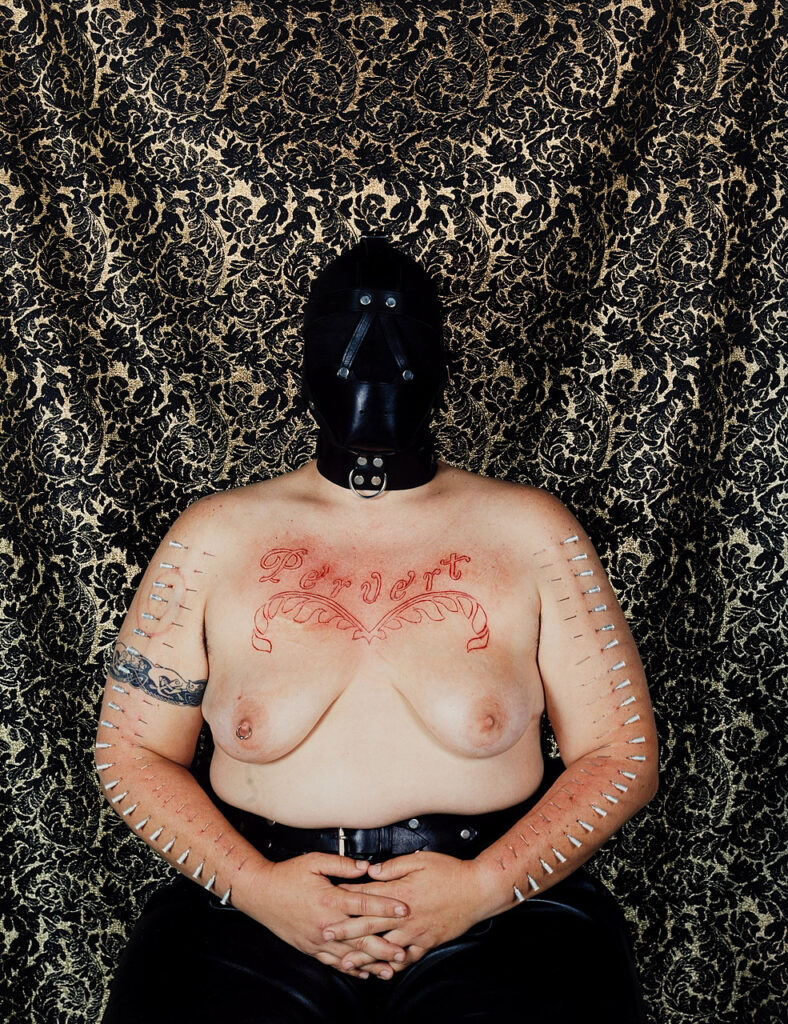
But Opie didn’t stop at the playful. She also documented the visceral reality of being queer during the height of the culture wars. Her self-portraits, like Pervert (where the word is delicately carved into her chest) and Cutting (featuring a childlike drawing of a house etched into her back), spoke to the pain and the domestic longing inherent in the queer experience.
She showed us that you could be a “pervert” in the eyes of the law and still crave the white-picket-fence safety of a home. She bridged the gap between the transgressive and the domestic, proving we contain multitudes.
The L Word Connection
For many younger Gen X-ers and Millennials, their first encounter with Opie’s work wasn’t in a museum, it was on Showtime. If you’ve ever sat through the iconic (and occasionally chaotic) opening credits of The L Word, you’ve seen Catherine Opie’s vision.
Starting in Season 2, the show’s intro featured a montage of lesbian life, including the famous portrait “Chicken” from the Being and Having series. Seeing a butch woman with a moustache on a mainstream television show in 2005 was a seismic event. It signaled to queer women everywhere that the show wasn’t just fluff; it had roots in real subcultures.
The connection went deeper than just the credits. The character of Bette Porter, a high-powered art Dean, was the perfect vehicle for Opie’s aesthetic. By placing Opie’s work in the background of Bette’s world, the show gave the lesbian community “cultural capital.” It said that our art wasn’t just radical, it was sophisticated, expensive, and world-class. It moved our subculture from the underground into the center of the cultural conversation.
Catherine Opie: To Be Seen
Fast forward to 2026, and Opie is taking her rightful place among the masters. Her current show at the National Portrait Gallery, To Be Seen, is a masterclass in interventions. The curators have placed Opie’s photographs directly alongside the gallery’s permanent collection of historical icons and royals.
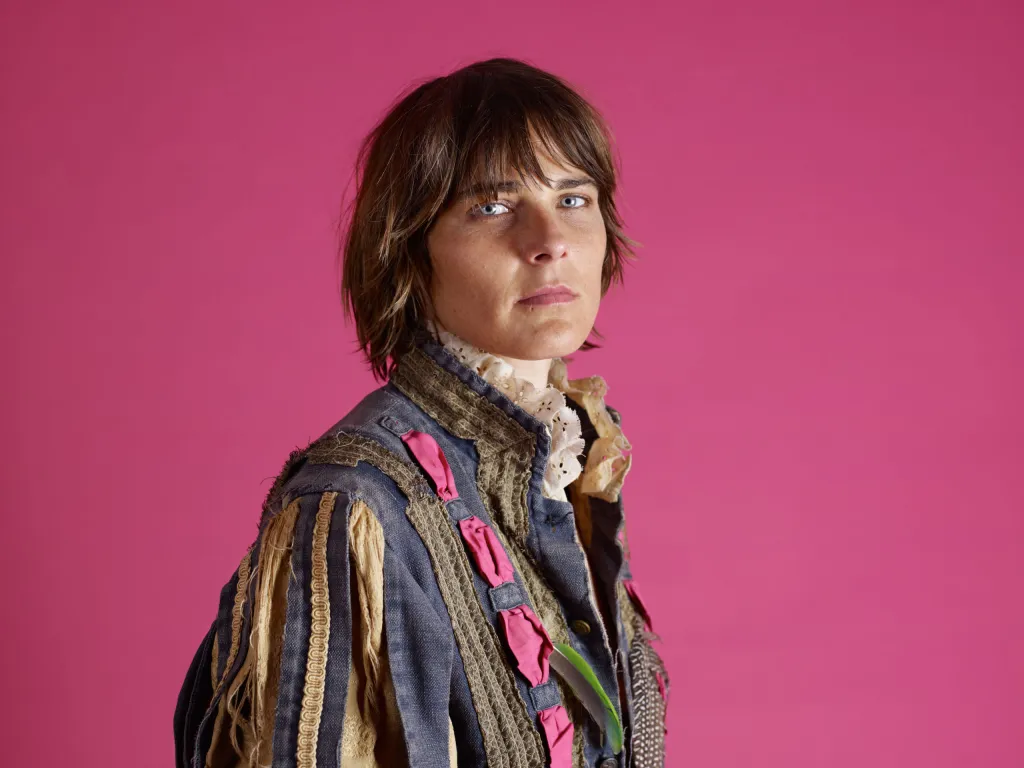
The standout of the show is undoubtedly her 2009 portrait of actor Daniel Sea (who played Max on The L Word). In the portrait, titled Daniela, Sea is captured with a vulnerability and grace that echoes the portraits of Tudor princes. By placing a trans-masculine icon in the same hall as King Henry VIII, Opie isn’t just asking for permission to be there she’s staging a takeover.The exhibition also highlights her later work, including her series on high school footballers and surfers. It shows that her interest in “subcultures” has expanded. She’s looking at how all Americans find community and how masculinity is performed, whether it’s on a football field or in a leather bar. It’s a reminder that the “queer gaze” isn’t just about looking at queer people; it’s a way of looking at the whole world with more curiosity and less judgment.
The Living Legacy
So, why does Catherine Opie matter so much to the legacy of queer women’s art? Because she refused to sanitize us. She didn’t try to make us look “palatable” for a straight audience. She took the leather, the scars, the drag, and the domesticity and wrapped them all in the dignity of high art.
She taught us that our subcultures are not fleeting trends, they are enduring strengths. She turned our private lives into public monuments. Because of Catherine Opie, when a young queer person walks into the National Portrait Gallery today, they don’t have to look for ghosts. They can look at the walls and see themselves, rendered in beautiful, high-resolution permanence. Opie’s work reminds us that being “seen” is a radical act, but being remembered is a revolutionary one. She has ensured that the history of lesbian subculture isn’t just a footnote, it’s the main event.