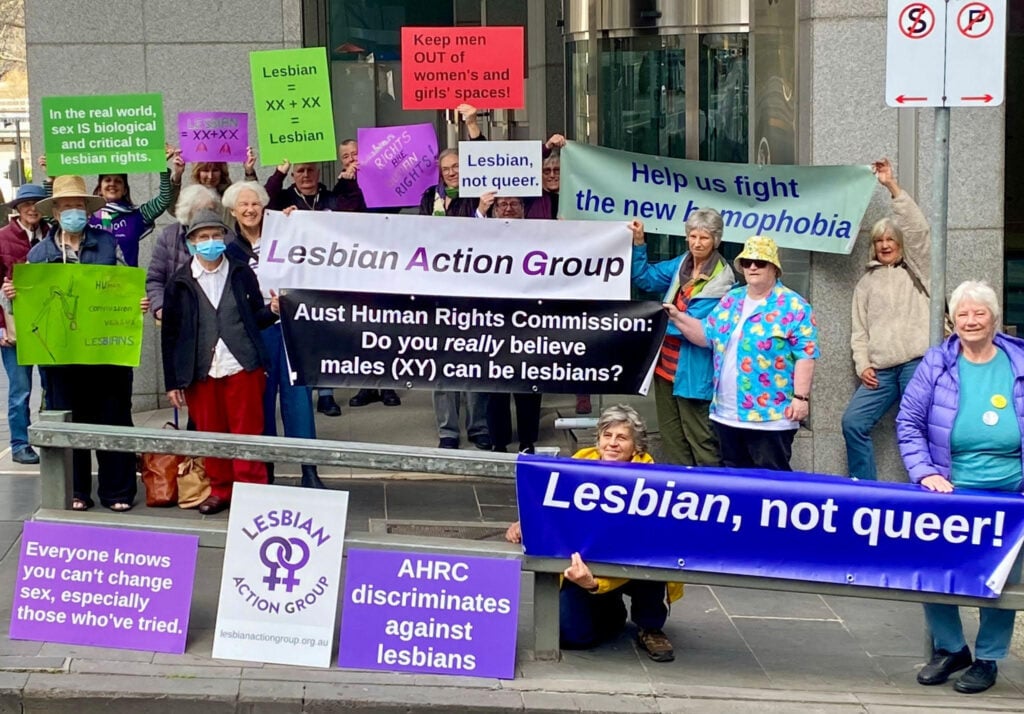
The Lesbian Action Group (LAG), a Melbourne-based organization, escalated its long-standing dispute to the Federal Court of Australia. The TERF group is seeking a formal legal declaration that would allow them to host events exclusively for “lesbian-born females,” a move that would effectively permit the legal exclusion of transgender women from their social and advocacy spaces.
This case represents a significant challenge to the current interpretation of Australia’s Sex Discrimination Act 1984 and follows years of administrative friction between the group and Australia’s human rights institutions.
From AHRC to the Federal Court
The current Federal Court litigation is the culmination of a three-year effort by the LAG to secure a “Section 44 exemption” from anti-discrimination laws.
The timing of this case is professionally significant due to the recent precedent set by Tickle v Giggle. in late 2025, the Federal Court ruled in favor of Roxanne Tickle, a transgender woman who was excluded from a women-only social media app. The presiding judge affirmed that under Australian law, “sex” is a changeable legal status and that transgender women are legally recognized as women.
The Lesbian Action Group’s legal team is now directly challenging that precedent. They argue that the Tickle ruling was an incorrect interpretation of legislative intent, asserting instead that “lesbian” should be strictly defined by biological sex at birth. By seeking this declaration, the LAG is attempting to create a judicial carve-out that would bypass the inclusive standards currently upheld by the Victorian and Federal governments.
Community Impact and Civil Rights Implications
For the broader LGBTQ+ community, this case is viewed as more than a technicality. It is seen as a strategic attempt to legitimize anti transgender gatekeeping. Human rights advocates, including Equality Australia, have argued that the LAG’s efforts are “intentionally cruel” and serve to marginalize a vulnerable subset of the community during a period of rising global transphobia.
The professional consensus among civil rights lawyers is that the LAG faces a steep uphill battle. Australian law has moved steadily toward a model of inclusion that prioritizes gender identity as a protected attribute. However, the persistence of the LAG suggests a broader “gender critical” strategy: using the courts as a platform to sustain a narrative of “conflicting rights” between cisgender lesbians and transgender women.
Current Status and Next Steps
The Australian Federal Court has acknowledged the high level of public interest by establishing an online portal to provide transparency on the proceedings. As of March 2026, the court is reviewing initial submissions. If the court upholds the previous tribunal decisions, it will further solidify the legal standing of transgender women in Australian public life. If it finds in favor of the LAG, it could trigger a massive restructuring of how “single-sex” exemptions are applied nationwide.